“Lord Knows”
Originally published in Chicken Soup for the Soul: Step Outside Your Comfort Zone (2017)
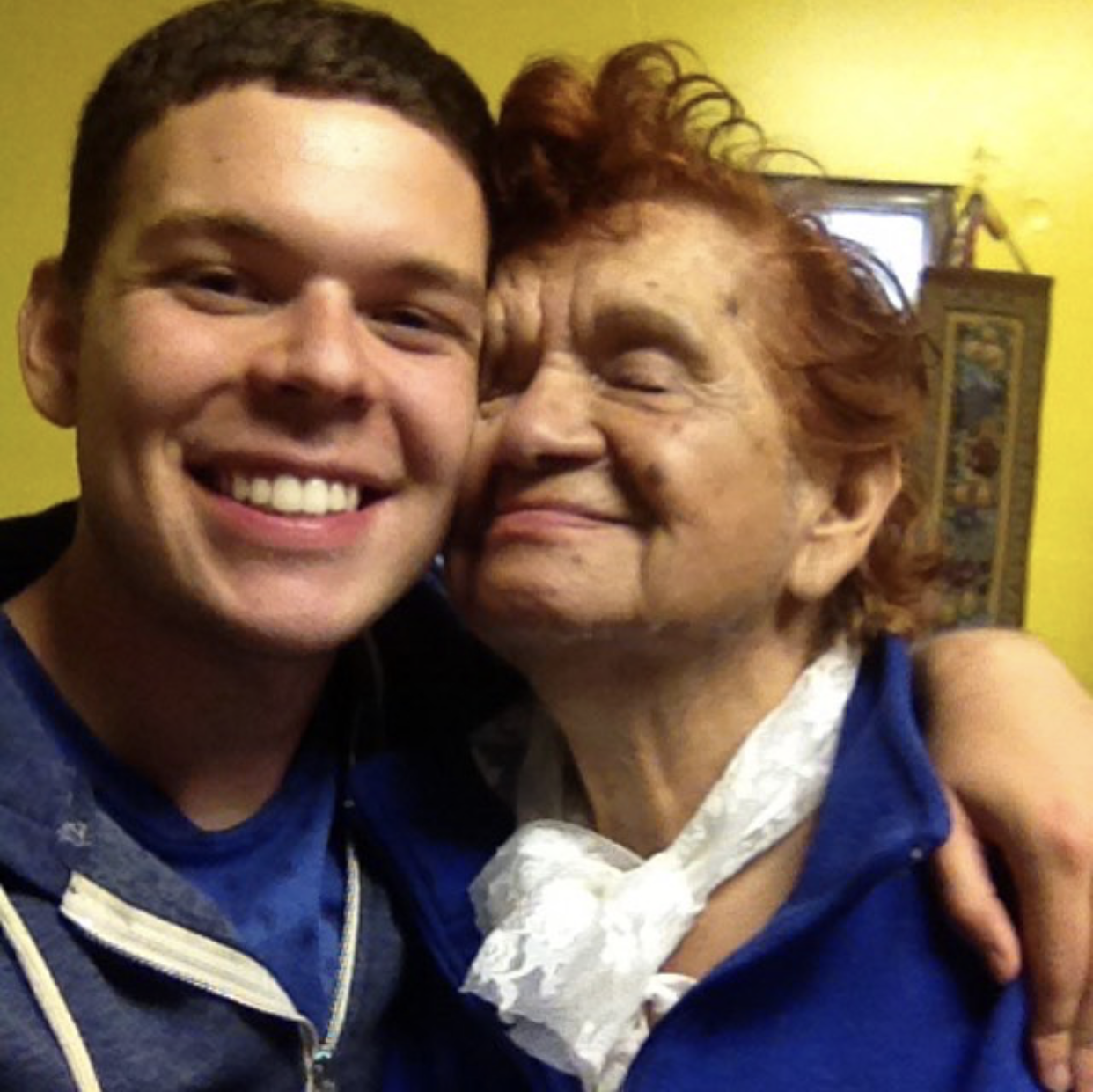
In a way, my grandmother Victoria knew me better than myself. She recalls when I was around seven years old and wanted to be a pastor. A lifelong Pentecostal, my grandmother fully supported this career move. She even bought me a tiny blue suit so I could look good while reciting Bible verses in the living room. We called it my “pastor suit.”
I loved and honored my grandma. I couldn’t imagine disappointing her. When I came out at sixteen, the one person I knew I’d never tell was my grandmother. One, because she couldn’t handle it, and two, because I couldn’t handle losing her.
Victoria’s righteous passion was well-known throughout Palmer, a small town in Alaska. You never quite knew what would stir her rage. Someone once asked why she kept playing the tambourine during slow songs at church, and she refused to look at the person again. When friends angered her, she cut them off. It didn’t matter if the friendship had lasted ten or twenty years. I learned about these breakups through casual conversation, usually long after the rupture.
“Grandma,” I’d ask her, “how’s Philip doing these days?”
“Lord knows,” she’d state.
This was code that their relationship was over, and so was the conversation.
During my first year of college, I knew I had to tell my grandmother. We couldn’t have a real relationship unless she knew about me being gay and how instrumental it was in shaping me.
Spring was starting, and I was walking around the campus green, thinking of ways to tell her. I took a rest beneath a large oak tree. I thought of calling her landline on the mountain, but my heart started racing, and I felt like throwing up. If I couldn’t think of the phone conversation without feeling dizzy, how would I act when it was time for me to tell her in real-time?
It hit me all at once that I’d send her a letter. My grandma was a prolific letter writer. In my first semester of college, she had already sent me seven letters. She preferred bulky, wide-ruled legal paper. She’d only write on one side of the paper and always with a red pen. She would fold the pages at least three times, shove the thick wad into an envelope, and seal it all up with tape.
I enjoyed these letters although I didn’t finish all of them. Her cursive was wildly ornate. It took her a long time to write like this, and by page three she got impatient, and the words looped together in a blur I couldn’t read. It didn’t matter. I already knew her great themes: love of God, family, and being good to your teachers. She supported each theme with a new Bible verse.
I tore out three pages from a journal and started to write. On the first page, I told her about the motivated kids I was meeting and all the smart professors. On the second page, I said I loved her, and I was grateful for her help in raising me. And on the final page, I wrote, “It’s because I love you that I feel the need to tell you I am gay. I’ve known this for a long time, and I want to tell you because I want to be honest and have no lies between us. I hope this doesn’t change anything between us.”
I tried to make everything light again by mentioning the spring weather and upcoming tennis try-outs. Then I folded the three pages like she did, three times, and squashed the pages into the back of my journal and walked to my next class. I couldn’t think clearly the next two days. I imagined Victoria sending me to a conversion camp. She might write back with all the Bible verses that supposedly hated gay people. Or knowing my preference for science, she might send me magazine clippings saying homosexuality made no evolutionary sense. The most probable reaction was also the worst: She would refuse to speak with me. When people asked how I was doing, she’d state drily, “Lord knows.”
Eventually, I dropped the letter into a mailbox right outside my dorm. It was early in the morning, and with nothing else in the mailbox, I heard the letter hit the metal floor. For a brief moment, I wanted the letter back. But then I decided—I would rather have true rejection than false acceptance.
A few weeks later, I received a brown, flat envelope from Victoria. I weighed the package in my palms; it was light. The envelope had her familiar red script. It couldn’t be a bomb, I thought. And I’m pretty sure they still scan for anthrax. Right?
I walked around the campus green again and sat beneath the oak tree where I had written the letter. My heart was pounding.
I ripped off the top binding like a Band-Aid. I tilted out the contents. My heart sank.
It was filled with photos. There I was on my fifth birthday with a bunch of cake on my face, smiling like crazy. There I was hitting a forehand at sixteen. There I was playing the trombone at thirteen. There were two dozen pictures with no explanation.
She no longer wanted to remember me. This was the first of a series of “Lord knows” statements regarding me.
I stuck my hand in the envelope again. My fingertips brushed a scrap of paper. I pulled it out. It was the size of a fortune-cookie scroll. In red coiled letters, it read: “Yo te amo mucho,
mucho.” I love you very, very much.
I laughed.
Under the oak tree, I flipped through more pictures. She saw me in each moment: spelling bees, band concerts, tennis tournaments. I shuffled them and felt her say, I loved you in this moment, and this moment, and this moment, and I love you now.
Tears swelled in my eyes. I had expected her to choose politics or religion, to find any reason to justify her disgust. But of all the things she could have said, she had chosen love.
Author’s Note: I wrote this essay as my MFA program in creative writing was wrapping up in early 2017. My abuela died on May 11th, 2016. She had helped raise me and was continually on my mind. When I heard that Chicken Soup for the Soul was looking for stories for a “Step Outside Your Comfort Zone” edition, I immediately remembered the unusual way I came out to her and my immense fear leading up to it.
I’m grateful to have watched this essay take on a life of its own. It was the first story about coming out published in the massively popular Chicken Soup series, which has rarely published anything LGBTQ+ related. While I’ve received some irksome comments, most reactions have been overwhelmingly positive. People have told me they hear their own grandmother in Victoria, recall their own struggles with the church, or feel a new commitment to show up for those who need their love.
Chicken Soup has re-published “Lord Knows” in several anthologies, and I hear that it is regularly taught in high schools and undergraduate courses. This means the world to me. My abuela and I used to read Chicken Soup stories to each other. Now we’re part of the anthology. And so are you.
❤️