Last words, lost words
Today I finished If Not, Winter: Fragments of Sappho translated by Anne Carson.
I picked up this new, gorgeous re-release from one of the Tate Modern’s intricate series of gift shops. Heading back to the States, I started reading it in an aisle seat. A flight attendant quipped, “You like fast reads?”
Granted, here’s what a typical page looks like:
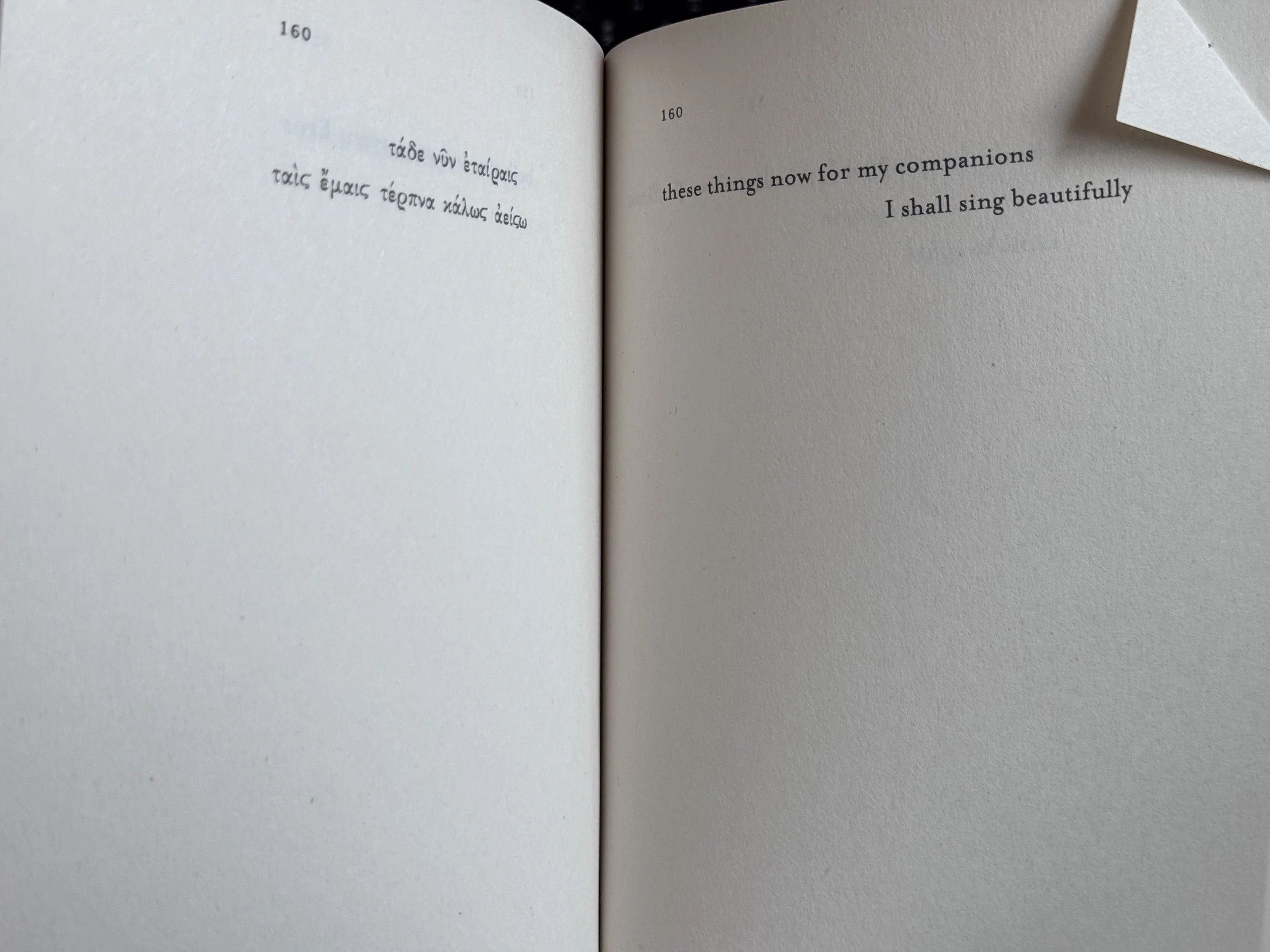
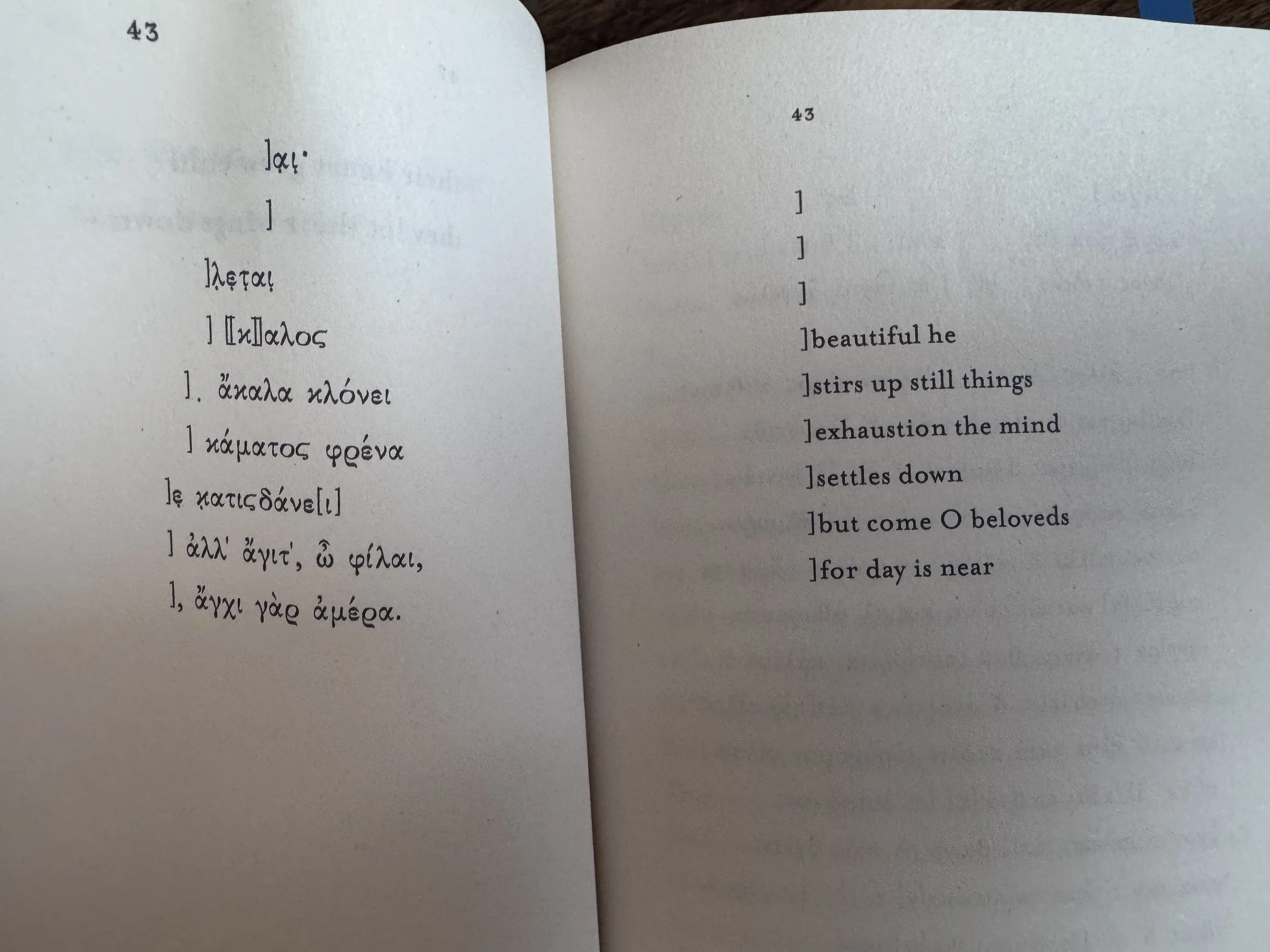
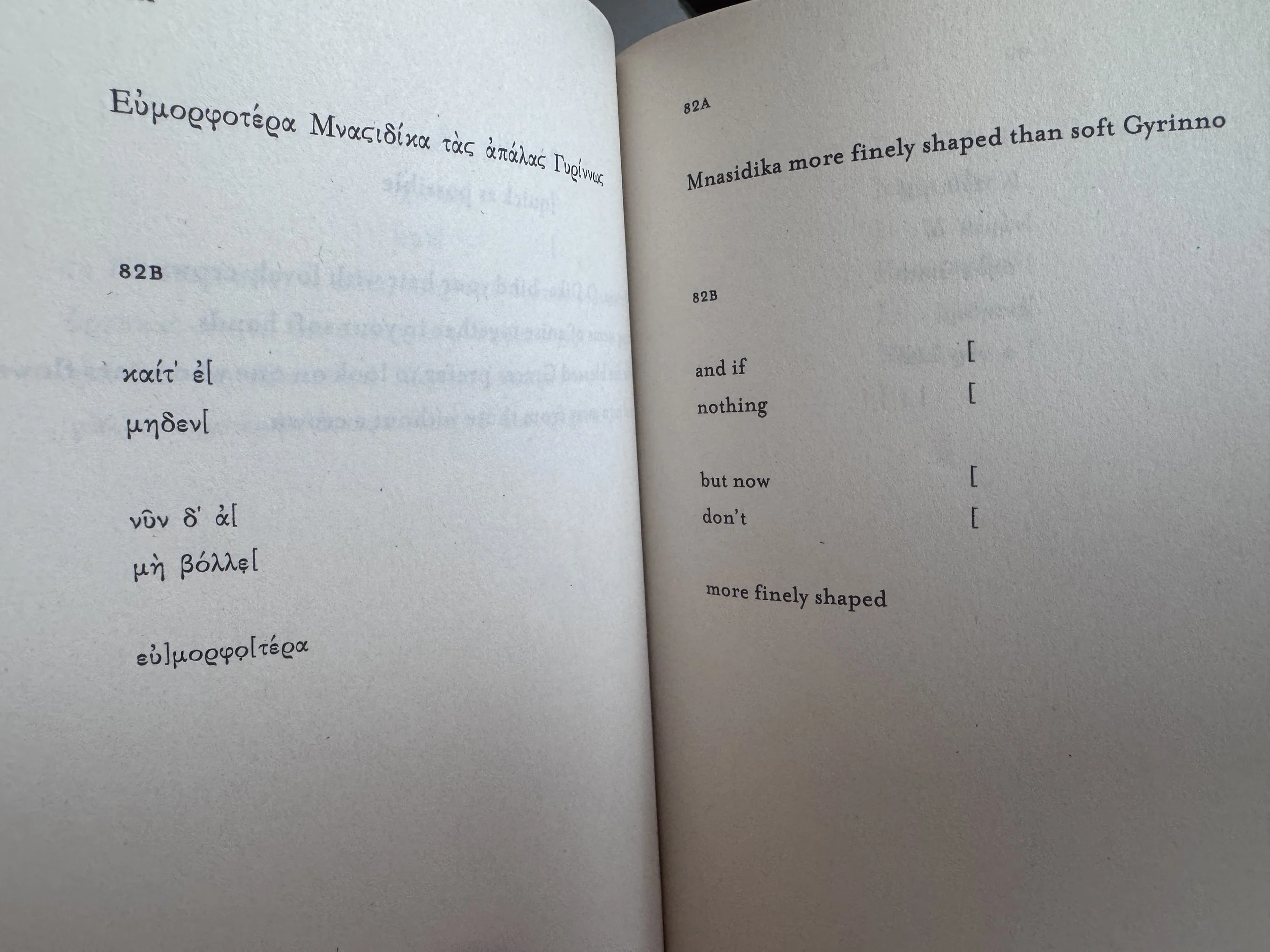
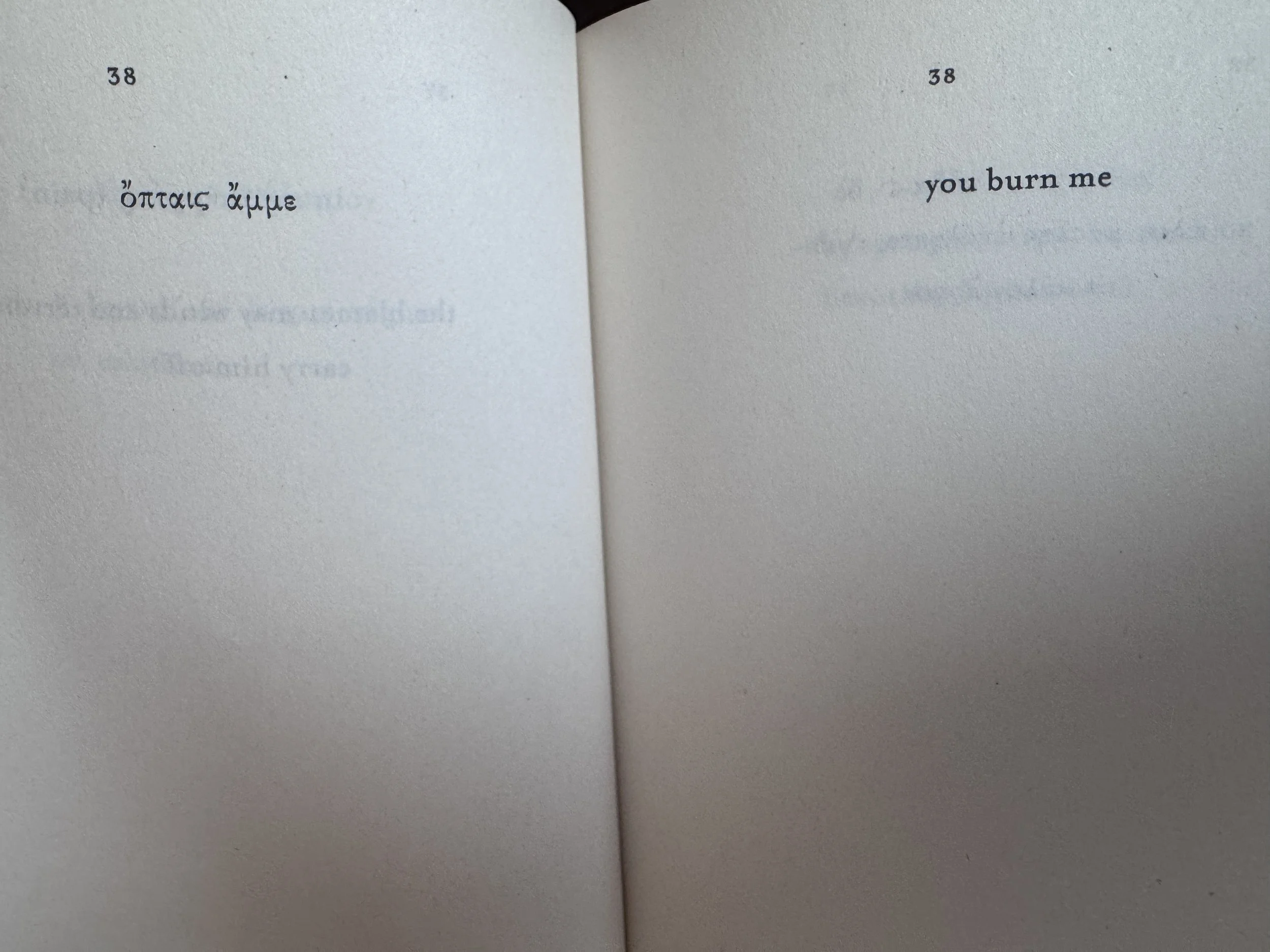
But all that white space is key, and moving through this collection in the presence of so much absence was strangely intense.
Sappho was the most famous musician of her time. Her poetry – her lyrics – were remnants of stunning verbal performance. Known as “the tenth Muse,” her work today is known only through recovered rolls of papyri or citations from ancient authors.
Carson writes that the Library of Alexandria likely held nine books of lyrics by Sappho, but only one survived (and barely). One destroyed book had 1,320 lines! But in 2026, only one fully intact poem remains — “Ode to Aphrodite,” at 28 lines.
There are 650 known fragments by Sappho. Many are only a few phrases or a single word. Say the average word count for a fragment by Sappho is five words in Ancient Greek. That’s roughly 3,250 words we still have from one of the most famous poets of antiquity. In contrast, the Folger Shakespeare Library cites 884,647 words and 118,406 lines attributed to Shake-speare (sic).
3,250 ÷ 884,647 = 0.00367, or about 0.37% of the total surviving Shakespeare corpus.
Imagine if we only had .37% of “Hamlet.” We might have stirring lines like “the rest is silence” or “something is rotten in the state of Denmark,” but we couldn’t piece together the plot or grasp the fantastic insight into human psyches that Shake-speare shows. We might miss the “To be or not to be” soliloquy, the graveyard scene or final duel, or famous credos like “Brevity is the soul of wit”; “To thine own self be true.” We might not know the name Ophelia.
Realizing the extent of absence in Sappho makes it a strangely powerful experience. We can only imagine the profundity surrounding lines like:
(slash marks mean a new line)
Eros shook my/ mind like a mountain wind falling on oak trees.
you burn me
someone will remember us/ I say/ even in another time
spangled is/ the earth with her crowns
For the man who is beautiful is beautiful to see/ but the good man will at once also beautiful be.
I used to weave crowns
Eros the melter of limbs (now again) stirs me — / sweetbitter unmanagable creature who steals in
Carson arranges the fragments from wholly intact to scarcely remaining. By the time you reach the final page, there are several fragments of single words like “soda” and “celery”; others are compound nouns like “Honeyvoiced,” “mythweaver,” and “of the Muses.”
Fragment 192 is the final one of this collection:
gold anklebone cups
God I love this.
An epic of absence ends by pointing to a brightly-colored drinking cup with a unique decoration.
Anklebone refers to a goat’s knucklebone (astragalus), which were used like dice and, apparently, decorated some cool-looking cups.
Our frenemy Google Translate renders this as “gold anklets, flasks.” So this may have been a poem describing a party. Or an intimate dinner. Or a running competition. It’s anyone’s guess.
Other translators have gone with:
golden goblets with knucklebone base (Diane J. Rayor)
gold cup with knobs like knucklebones (Sam Hamill)
Either way, I love the ordinariness of this ending.
It reminded me of Leonardo Da Vinci’s last words. At least, the last words he ever wrote in a notebook from 1518 before he died in France 1519 at 67. I read this as freshman in college and I still remember it often.
While drafting the shifting effects of right angles on rectangles, Leonardo stops abruptly to write:
ecc. perché la minestra si fredda
My preferred translation:
And so forth. But the soup is getting cold.
How beautiful.
No matter how abstracted or ambitious we become, how socially stratified or distant from the past, we remain tied to the common effects of life.
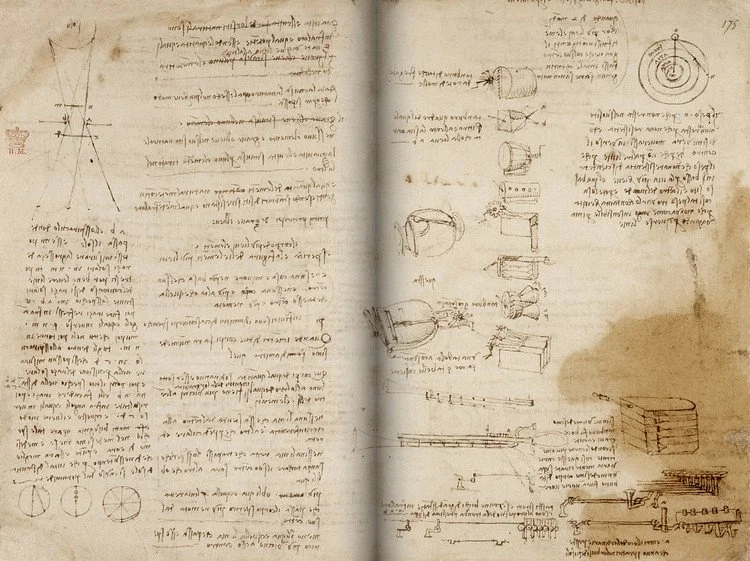
From Codex Arundel